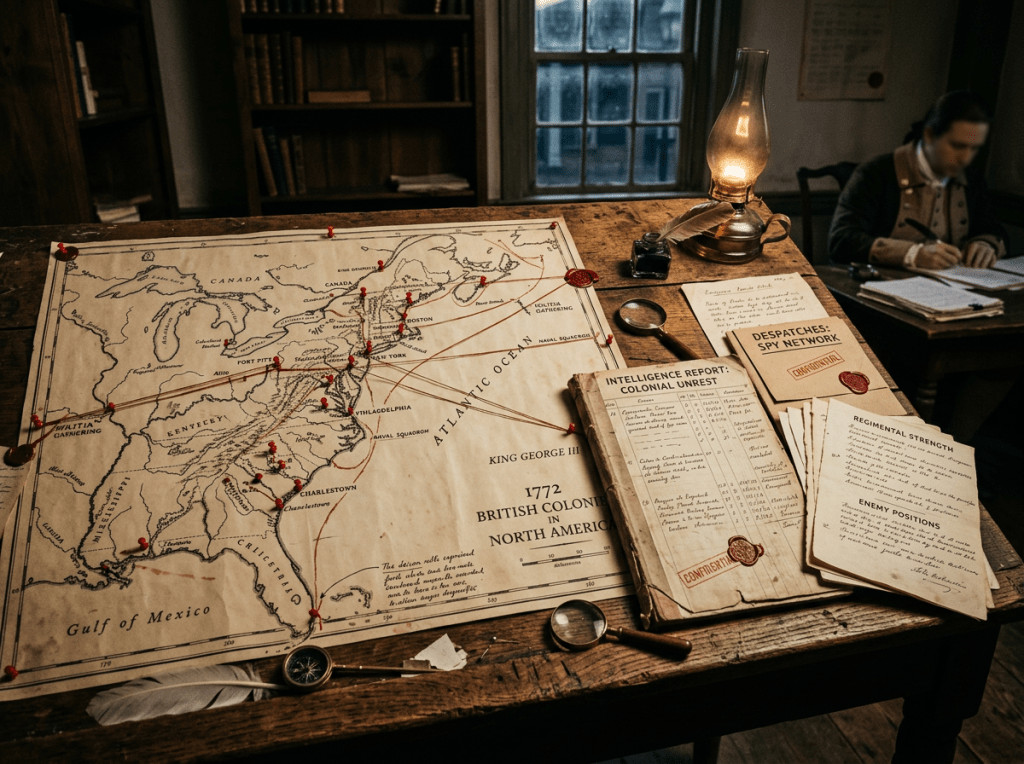
Colonial policing wasn’t improvised; it was carefully developed, refined, and then brought home. — Daniel Davis
How Colonial Policing Shaped Policing at Home
Across the empire, Britain built a vast toolkit for governing populations who were denied political power. These techniques were not improvised responses to local conditions, they were carefully developed, documented, and refined over decades of colonial administration. And when Britain faced internal dissent or unrest, they were repurposed and rebranded for domestic use as modern necessities, rather than acknowledged as instruments of imperial control.
This part examines five of the most consequential colonial techniques that shaped modern British policing, and traces how each made the journey from empire to home institution.
1. Population Surveillance and Categorisation
One of colonial administration’s most significant contributions to modern governance was the development of systematic population surveillance. Across India, Ireland, Kenya, and elsewhere, colonial administrators built detailed registers of the people they governed — village records, caste and tribe lists, passbooks controlling movement, political reliability files, ethnicity-coded intelligence, and informant networks reaching into the smallest communities. The operating principle was straightforward: know the population, classify the population, control the population.

This wasn’t simply information gathering, it was the creation of a governing structure that marked certain groups as needing constant surveillance and management. The labels didn’t just describe risk, they created it.
When this logic returned to Britain, it shaped some of the most significant institutions in domestic policing. Special Branch, established in 1883 originally to monitor Irish Republican activity, drew directly on colonial intelligence methods such as informant cultivation, political monitoring, and the categorisation of communities as seditious. MI5’s early domestic mandate reflected the same traditions. And in more recent decades, the same underlying logic appears in Prevent’s safeguarding categories, the Gangs Matrix, and the algorithmic risk models increasingly used to predict and pre-empt offending. Although the specific technologies have changed, the governing principle — identify, classify, manage — has not.
For how this classification logic shaped the formal construction of race as a governing category, see O.3.
2. Pre‑emptive Policing and Early Intervention
Colonial policing was explicitly preventive. Officers were not primarily expected to respond to crime after it occurred, they were expected to prevent resistance before it could organise. This meant breaking up gatherings on suspicion rather than evidence, monitoring community leaders, dispersing crowds described as threats to public order, arresting organisers before protests could take shape, and conducting raids on the basis of political intelligence rather than criminal proof. Due process was a domestic luxury. In the colonies, pre-emption was the point.

This logic travelled home through the people and institutions that had practised it abroad. The policing of trade unions in the nineteenth and early twentieth centuries, the surveillance and infiltration of organising committees, and pre-emptive disruption of strike action, followed the colonial preventive model closely. Anti-terror legislation, particularly from the 1970s onwards, institutionalised pre-emptive arrest and extended detention. Section 60 of the Criminal Justice and Public Order Act 1994 gave police the power to stop and search anyone in a designated area without requiring reasonable suspicion — a direct legislative expression of the colonial principle that prevention justifies intervention without evidence.
As established in O.1, the preventive mindset was already visible in early domestic policing of the working class. Empire didn’t create it, but by providing tested methods, institutional precedents, and the professional confidence that pre-emptive intervention was both effective and legitimate, it turbocharged it.
3. Riot Control and Public Order Management

Modern British public order policing did not originate with the miners’ strikes or the Poll Tax riots. Its techniques were developed much earlier, in the management of colonial uprisings including the Indian Rebellion of 1857, the Morant Bay uprising in Jamaica in 1865, repeated Irish rebellions, and anti-colonial protests across Africa and Asia. In each context, colonial forces refined methods for restoring order rapidly, with minimal political cost and maximum deterrent effect — baton charges, mounted containment, cordon and search operations, mass arrest, and encirclement tactics designed to exhaust and disperse crowds through physical pressure rather than engagement.
These techniques were designed for contexts in which the crowd had no political legitimacy and the state had no obligation to negotiate. When translated into domestic use, that foundational assumption came with them.
The pattern is traceable across more than a century of British public order policing. The 1889 London dock strike was managed with methods that closely resembled colonial crowd control. The 1926 General Strike saw military-style mobilisation that drew explicitly on imperial precedent. The 1984–85 miners’ strike, particularly the Battle of Orgreave, involved public order tactics, including cavalry charges and mass arrest, that bore a striking resemblance to colonial riot management. These episodes, and what they reveal about the persistence of colonial assumptions in domestic policing, are examined further in Part 4.

What they share is the underlying premise that disorder is a problem of populations to be controlled, not a signal of grievances to be addressed. A premise that’s colonial in origin.
For how public order policing constructed disorder as a political problem, see O.8.
4. Criminalising Communities Through Group‑Based Suspicion
Across the empire, entire communities were classified as dangerous by nature rather than by conduct. The Criminal Tribes Act 1871 in India designated whole communities as hereditary criminals, subjecting them to registration, surveillance, and restricted movement because of the group they belonged to, not because of anything individuals had done. Similar frameworks operated across colonial Africa and the Caribbean, where seditious classes, unruly natives, and fanatic sects, were defined and managed as collective threats. Group identity was evidence. Individual guilt was beside the point.
The logic that membership of a particular community constitutes a form of risk did not remain overseas. It shaped domestic policing of Irish communities throughout the nineteenth and twentieth centuries, of Black communities from the 1919 race riots onward, of working-class neighbourhoods defined as criminal territory, and of youth cultures from Mods and punks to ravers and the grime scene. Each in turn treated as organised threats requiring intelligence-led management rather than civic engagement.
After 2001, Muslim communities became the primary target of group-based suspicion, institutionalised through counter-terrorism frameworks that treated an entire religious identity as a risk category. The Gangs Matrix, the Metropolitan Police database listing individuals assessed as gang-involved, the overwhelming majority of whom are Black and many of whom have no criminal convictions, is a contemporary expression of exactly the same logic: identity and association as proxies for guilt.

The through-line from the Criminal Tribes Act to the Gangs Matrix is not incidental. It is structural. Once identity becomes evidence, disproportionality becomes method.
For how group-based suspicion became racialised into a formal governing framework, see O.3 and O.7.
5. Militarised Infrastructure and Command Structures
Colonial forces operated through explicitly militarised structures — hierarchical ranks, barracks-style command, centralised intelligence, paramilitary drills, and coordinated regional response units designed to ensure rapid, unquestioned action across large territories. The purpose wasn’t just efficiency, it was the institutional expression of a relationship between state and population that was fundamentally one of authority over subjects rather than service to citizens.
This architecture shaped British domestic policing in ways that persist today. The Territorial Support Group and its predecessors; modern public order units, mutual aid mobilisation systems that allow forces to deploy rapidly across force boundaries, firearms command structures, and counter-terrorism policing all reflect the militarised command model developed in colonial contexts. The Royal Irish Constabulary, a militarised, intelligence-driven force built to govern Ireland, served as an explicit template for police forces across the empire and fed directly back into British domestic institutional design.
The command model of British policing owes more to this imperial inheritance than it does to the civilian, consent-based ideal that official histories prefer to emphasise.
Bridge: Part 2 → Part 3
Part 2 showed how colonial techniques travelled home. Not as abstract ideas, but through specific historical moments in which methods tested overseas were applied to domestic populations. The evidence is clear, but evidence alone does not explain endurance.
Part 3 examines how these imported methods became doctrine. How colonial assumptions were absorbed into professional culture, translated into institutional thinking, and reproduced long after the empire that created them had formally ended.
Part 3 explores:
- how colonial categories of risk and disorder were turned into domestic theories of threat
- how those theories shaped training, command structures, and operational judgment
- how institutional memory carried colonial logics forward even without conscious intent
- and why doctrine, once embedded, proves far harder to dislodge than practice
From the toolkit to the theory — and into the institution.
About the Series
By Daniel Davis | Researcher and Commentator on Policing and Social Justice.
Continue to Part 3 — Bringing the Empire Home
Explore The Full Series: Governing Through Crisis
Follow & Subscribe: LinkedIn | Bluesky | Twitter