“The system isn’t broken. It was built this way.” — Daniel Davis
The End of Empire… Without the End of Its Infrastructure
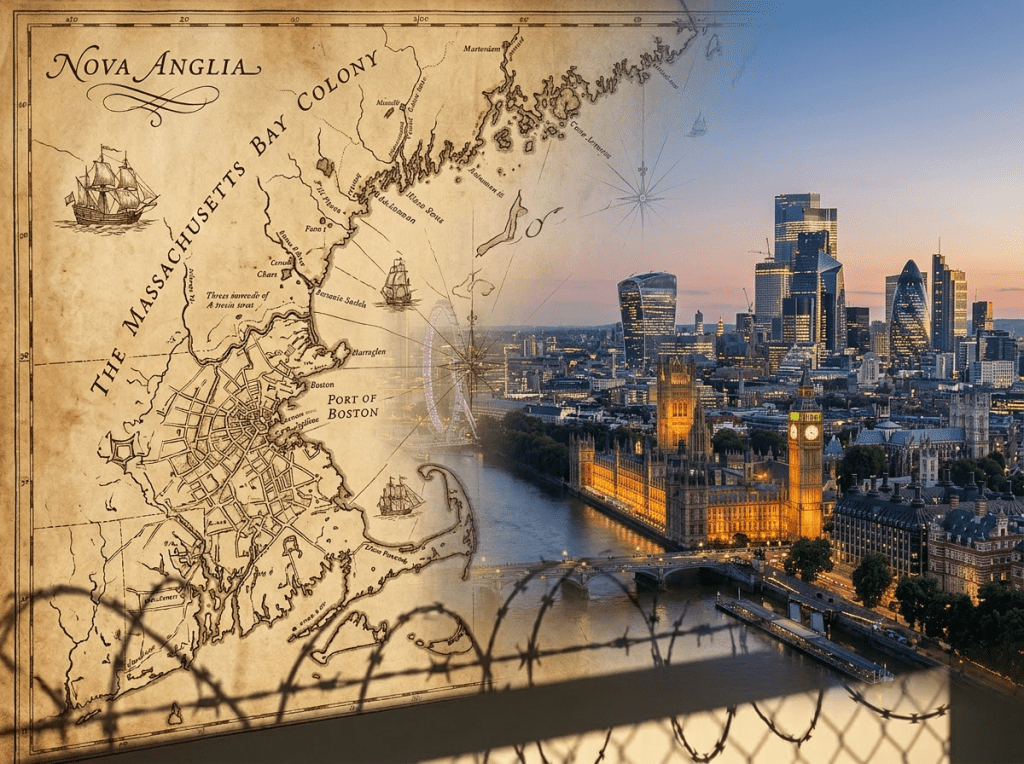
When Britain’s formal empire collapsed after the Second World War, its policing structures did not collapse with it. They were not dismantled, interrogated, or meaningfully reviewed — they were repatriated. Colonial officers were folded back into UK forces, colonial intelligence frameworks were absorbed into Special Branch, and emergency powers tested in Kenya, Malaya, and Palestine shaped domestic legislation on public order, terrorism, and internal security. The logic remained intact: manage unrest early, classify populations by risk, treat dissent as a security problem.

For newly arrived migrants from the Caribbean, Africa, and South Asia, this meant stepping into a country whose institutions still carried the muscle memory of rule over colonised peoples. For example, the policing that greeted the Windrush generation and those who followed wasn’t built on consent; it was built on control. The empire ended on paper, but its policing grammar did not.
How Colonial Techniques Became “British Common Sense”
Over time, the origins of imported techniques faded from institutional view. Practices that had once been explicitly colonial, such as mass surveillance, infiltration, preventive control, and population-level suspicion, were gradually rebranded as British policing traditions. They lost their colonial labels and acquired the authority of professional common sense. And in doing so, became significantly harder to challenge as they no longer appeared to have origins that could be examined or contested. Three colonial logics in particular underwent this process of naturalisation.
The first was suspicion by category — the practice of policing kinds of people rather than kinds of actions. This flowed directly from the colonial habit of classifying populations as loyal, neutral, or subversive, and it was replicated in Britain’s treatment of Irish communities throughout the nineteenth and twentieth centuries, of youth cultures from the 1950s onward, of migrants arriving in the post-war decades, and of Black British communities whose presence was framed, almost from the outset, as a policing problem rather than a social reality to be engaged with.

The second was prevention through pressure — the logic that the state should act early, decisively, and visibly, not primarily to address crime, but to discourage resistance before it could organise. This principle underpins stop and search, dispersal orders, pre-emptive arrest, and what has come to be called disruption policing: the use of police presence and intervention not to investigate offences but to make certain kinds of collective action impractical.
The third was intelligence before engagement — the assumption that information gathering precedes and outweighs relationship building, and that threats are political before they are criminal. Special Branch’s domestic remit grew directly out of colonial intelligence services. The assumption that certain communities are sources of political risk requiring constant monitoring, shaped the institutional culture of British intelligence-led policing long before the post-2001 counter-terrorism framework gave it new legislative expression.
By the late twentieth century, these three logics had become so embedded in professional practice that few within policing recognised them for what they were: remnants of a system designed to govern subjects, not citizens.
When Crisis Came, Empire Answered
The durability of these logics became most visible at moments of political pressure. Across the second half of the twentieth century, whenever the state faced a significant challenge to its authority, it reached for methods that were recognisably colonial in origin.

The 1981 Brixton uprising is the clearest example. The immediate trigger was Operation Swamp 81, a Metropolitan Police operation that deployed hundreds of officers to stop and search thousands of people in Brixton over five days, targeting young Black men on the basis of profile rather than evidence. The operation followed colonial preventive logic precisely: saturate the area, disrupt potential organisation, demonstrate control through visibility. The community’s response; four days of uprising, was then interpreted by the police not as evidence that the strategy had failed, but as confirmation that more intensive policing was required. As the Scarman Report later acknowledged, the policing had produced the very tensions it claimed to prevent. The feedback loop was complete.
The 1984–85 miners’ strike followed a similar pattern. The state’s response — mass mobilisation of police from across the country, pre-emptive roadblocks preventing miners from travelling to picket lines, the Battle of Orgreave in which cavalry charges were used against striking workers — drew explicitly on public order methods developed for colonial crowd control. Dissent was treated as insurrection and workers were treated as a population to be contained. The colonial reflex was operating in the English coalfields as clearly as it had operated in the Kenyan highlands or the streets of Belfast.

Britain wasn’t learning new methods; it was relying on old ones. And the consistency of that reliance, across decades and across very different forms of social conflict, is precisely what makes the colonial inheritance so consequential. Reforms that do not address this underlying architecture repeatedly produce the same result: new language, unchanged outcomes. The result was a pattern: when political pressure rises, Britain defaults to its imperial policing reflexes.
The Digital Afterlife of Colonial Control
As policing entered the digital age, the imperial logics didn’t disappear, they incorporated new tools. Where colonial administration used ledgers, registries, and informant networks to classify and monitor populations, modern policing uses predictive policing algorithms, automated facial recognition, gang databases, risk assessment models, and social network analysis. While the technologies are new, the governing logic isn’t: categorise populations, predict threat based on identity rather than behaviour, intervene pre-emptively, and justify that intervention through the language of risk and public safety.
The critical problem with data-driven policing tools is that they are built on historical data — which means they are built on historical bias. A predictive policing system trained on decades of Metropolitan Police stop and search records will predict, with algorithmic confidence, that Black men in certain postcodes are high-risk. Not because this is necessarily true, but because the data records where police have historically chosen to look. The algorithm encodes the disproportionality, then it recommends reproducing it. Predictive policing predicts one thing above all else: where police have historically policed.

Facial recognition technology carries the same problem in a different form. Studies have consistently found that facial recognition systems perform significantly less accurately on Black and Asian faces, producing disproportionate rates of false matches, wrongful stops, and arrests. The technology presents itself as objective and immune to the prejudices of individual officers, but objectivity built on biased foundations isn’t neutrality, it’s the laundering of historical discrimination through the language of data science.
For practitioners working with these tools today, this matters practically. When a risk assessment flags an individual, when an algorithm designates a postcode as high-priority, when a facial recognition match initiates a stop, the decision that follows feels technical, evidence-based, and procedurally sound. But the evidence it is based on carries the assumptions of the system that generated it. Those assumptions have histories. And those histories, as this chapter has traced, run directly back to the colonial classification of populations as dangerous, governable, or suspect. The technology is new, the logic is two hundred years old.
Conclusion: The Grammar That Outlasted the Empire
Modern British policing did not emerge from democratic principles or Peelian ideals operating in isolation. It grew out of a global system built on hierarchy, racial classification, and the management of populations deemed volatile or inferior. And when that system formally ended, its methods did not end with it. They were absorbed into the metropole, rebranded as domestic tradition, and embedded in the institutions, frameworks, and professional cultures that shape policing today.

The patterns this produced are not modern errors, they are historical continuities. Disproportionality in stop and search, the over-policing and under-protection of Black communities, the treatment of dissent as a security threat, the resistance of policing institutions to meaningful accountability are not aberrations from an otherwise sound system. They are the system working according to assumptions it has always carried, now expressed through digital tools that give those assumptions the appearance of objectivity.
Understanding this inheritance is not an academic exercise, it’s the necessary starting point for any reform that aims to go beyond the surface. A system cannot be changed by people who do not understand what it was built to do, and what British policing was built to do — manage populations, pre-empt resistance, protect order for those who already hold power — has never been fully confronted. Which is why the same findings appear in inquiry after inquiry, generation after generation, with the same sense of discovery and the same disappointing aftermath.
The empire ended, but its policing grammar did not. And until that grammar is named, examined, and deliberately dismantled, it will continue to write the outcomes that reform promises to prevent.
Bridge to O.3
If this chapter has shown how colonial methods were imported and embedded, the next examines how they were given a racial logic that made them appear natural.
Because the tools of control needed a theory to justify them.
O.3 explores:
- how race was constructed as a governing category within British policing
- how colonial racial classifications were translated into domestic frameworks of risk and suspicion
- and how that racial infrastructure continues to shape policing outcomes today
From the methods of empire to the logic that sustained them.
About the Series
By Daniel Davis | Researcher and Commentator on Policing and Social Justice.
Read 0.2 Practitioner Brief — The Imperial Boomerang
Then Continue to Chapter 0.3 — The Racial Infrastructure of Policing: Empire’s Logic at Home — Part 1
Explore The Full Series: Governing Through Crisis
Follow & Subscribe: LinkedIn | Bluesky | Twitter