The archive of empire was waiting for the people empire had produced. — Daniel Davis
When Racial Categories Crossed the Sea
As O.2 established, the return of colonial officers and methods to Britain carried with it something less visible but equally consequential: the racial frameworks through which those officers had learned to interpret populations. When large-scale migration, primarily from the Caribbean, South Asia, and Africa began after the Second World War, British institutions were not encountering difference for the first time. They were encountering populations for whom interpretive categories already existed, inherited from the colonial archive.

This matters because it reframes what happened to migrant communities in post-war Britain. The intensified policing of Black communities was not a response to crime or disorder that happened to fall along racial lines, it was the activation of pre-existing frameworks, applied to new populations in a new domestic context. Immigration officers, local authorities, and police forces drew on long-standing imperial scripts framing Black communities through assumptions of volatility, South Asian communities through assumptions of insularity, and African-Caribbean youth through assumptions of rootlessness and high risk.
Social problems produced by structural inequality;poor housing, labour market discrimination, or inadequate public services, were instead attributed to cultural deficiencies, in a move that replicated colonial governance’s habit of treating the consequences of exploitation as evidence of inherent inferiority. The policing that followed was its direct expression.

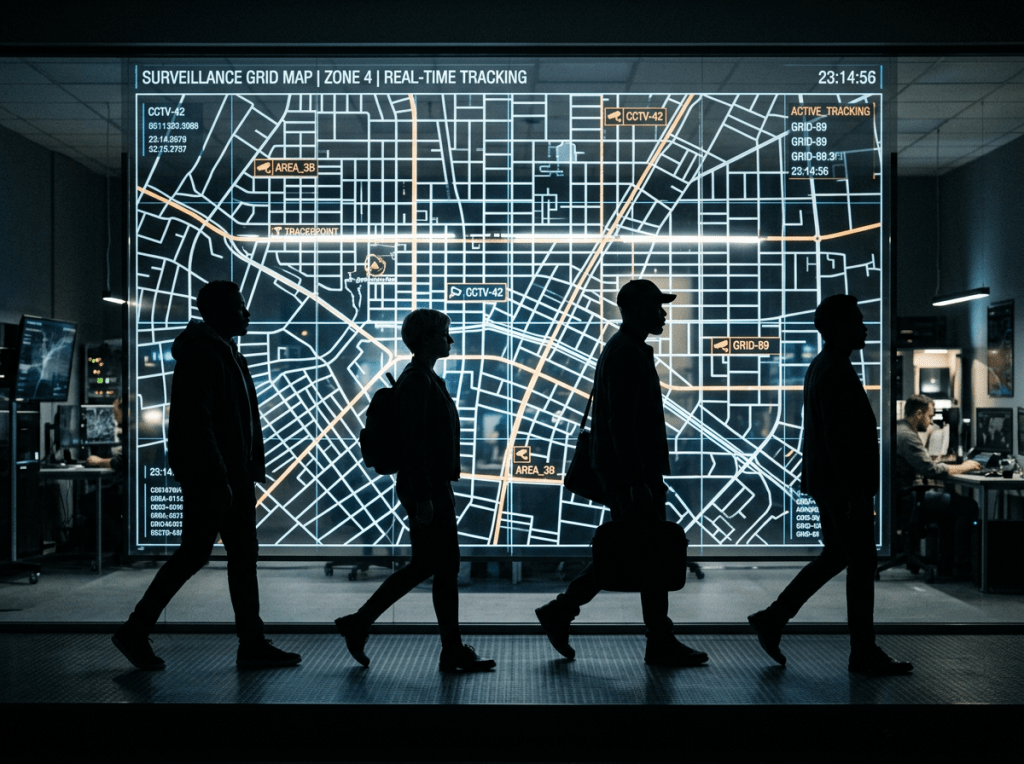
Areas with significant Black populations received more intensive patrol. Intelligence reports described communities using language inherited from colonial documentation. Gatherings, parties, and cultural events were treated as potential disorder. And when riots, protests, and community tensions emerged — from Notting Hill in 1958 to Brixton and Handsworth in the 1980s — police interpreted events through the colonial lens they had inherited: collective action as disorder, and community resistance as confirmation of threat. These weren’t new judgments, they were the repurposed assumptions of empire, redirected at a new domestic context.
The Post-War Moment: Structure, Anxiety, and the Recycled Script
The colonial script was not activated in a vacuum. Post-war Britain was a society under significant structural pressure. Economic uncertainty, housing shortages, deindustrialisation, and the psychological disruption of imperial decline all created conditions in which anxieties about belonging, order, and national identity were already acute. It was into this environment that Black and Asian migrant communities arrived, and it was through this environment’s anxieties that the colonial archive was most readily accessed.
The framing of minority communities as sources of disorder served a function in this context. It provided an explanation for social problems that deflected attention from structural causes — from the housing policies that confined migrant families to the worst available stock, from the labour market discrimination that channelled them into the lowest-paid and most precarious work, and/or from the welfare systems that consistently failed them. If communities were inherently volatile, culturally deficient, or naturally prone to criminality, then the inequalities they experienced were their own fault rather than the product of a society that had never intended to treat them as citizens.

Police intelligence reports of the 1950s through 1970s reflected this framing directly, describing Black communities using language including — “volatility,” “tribal conflict,” “natural aggression” — that was continuous with colonial documentation rather than responsive to actual evidence. Disproportionate policing was not experienced as discrimination by those who practised it. It was experienced as necessary, as the rational response to a genuine risk that the categories themselves had constructed. This is how racialised policing became normalised: not necessarily through explicit racist policy, but through the institutional treatment of colonial assumptions as professional common sense.
The consequences of this normalisation surfaced, explosively, in the uprisings of 1981 and beyond. The Scarman Report acknowledged that policing had contributed to the conditions that produced Brixton. The Macpherson Report went even further, finding institutional racism embedded in the Metropolitan Police’s culture and practices. But by the time those reports were written, the racial infrastructure of policing had been in place for more than a century. The reports named the problem, but they did not, could not, dismantle the architecture that produced it.
Bridge: Part 2 → Part 3
Part 2 has shown how racial categories travelled home, and how the colonial archive was activated in post‑war Britain, shaping the policing of communities who arrived into institutions already primed to view them as risk. But categories alone do not explain durability. Part 3 examines how these assumptions became institutional memory, and racialised logics embedded themselves in training, culture, and everyday practice until they felt like the natural order of things.
Part 3 explores:
- how racialised assumptions are transmitted through informal mentoring and organisational folklore
- how intelligence categories encode race without naming it
- how enforcement patterns create self‑reinforcing cycles of suspicion
- and why institutional defensiveness protects these logics even when they are publicly named
From the categories that travelled home to the architecture that kept them alive.
About the Series
By Daniel Davis | Researcher and Commentator on Policing and Social Jus
Continue to Part 3 — Institutional Memory: How Racialised Logics Become “Just the Way Things Are”
Explore The Full Series: Governing Through Crisis
Follow & Subscribe: LinkedIn | Bluesky | Twitter