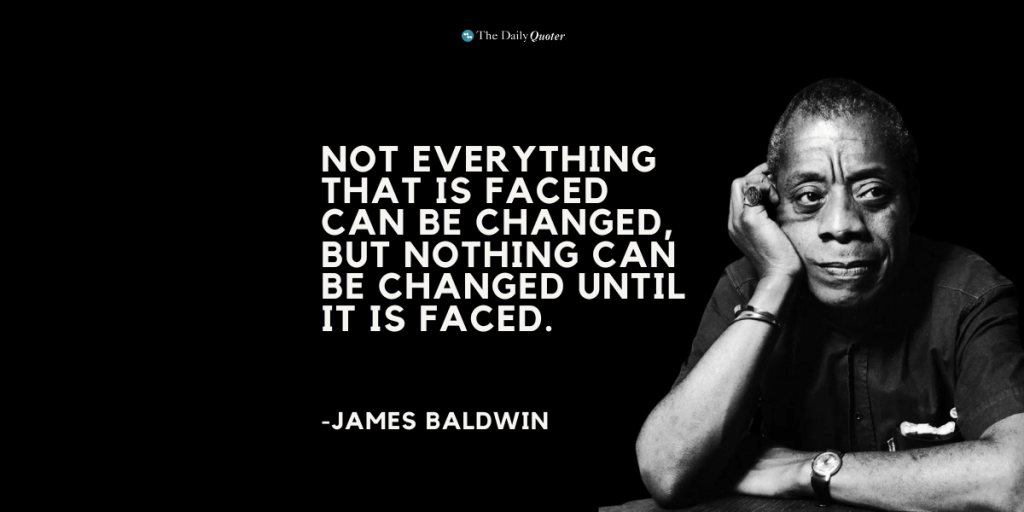
Not everything that is faced can be changed, but nothing can be changed until it is faced. — James Baldwin
Why Reform Has Proven So Difficult
The persistence of racialised policing across decades of reform, inquiry, and stated institutional commitment to change is one of the most important facts about British policing. And one of the least adequately explained in mainstream debates.
The standard explanations that racism reflects the attitudes of individual officers, that better training will produce better outcomes, or that more diverse recruitment will change institutional culture, are not wrong in themselves. But they are insufficient, because they treat racialised policing as a problem of individuals operating within an otherwise sound institution rather than as a structural feature of the institution itself.

The Macpherson Report in 1999 introduced the concept of institutional racism precisely to capture this distinction — to name the difference between the prejudice of individual officers and the collective failure of an organisation whose processes, cultures, and assumptions produce racially discriminatory outcomes regardless of individual intent. As noted in O.1 and O.2, the Casey Review in 2023 found the same institution to be institutionally racist a quarter century later, despite the intervening reforms, reviews, strategies, and commitments.
The response of Metropolitan Police Commissioner Mark Rowley to the Casey Review is itself telling. Accepting the report’s findings while refusing to use the phrase “institutionally racist” to describe the force he leads, Rowley demonstrated precisely the mechanism this chapter has been examining: the institutional capacity to acknowledge specific failures while resisting the structural diagnosis that would make those failures legible as a pattern rather than as exceptions. Naming the problem systemically would require confronting what the system was built to do. Describing it as a series of individual or cultural failures allows the architecture to remain intact.

This is why reform consistently produces new language without changing underlying outcomes. Until the structural foundations — the governing logics of classification, pre-emption, and group-based suspicion traced across O.1 through O.3 — are explicitly confronted, the institution will continue to generate the same patterns regardless of the specific practices being reformed.
What Practitioners Inherit
For practitioners working within policing and related institutions, the analysis across these three chapters raises a question that is both simple and genuinely difficult: what does it mean to work professionally and ethically within an institution whose structural foundations produce outcomes you would not choose?

The answer is not straightforward, and this series does not offer a simple prescription. But the analysis does clarify what the question requires. It requires, first, the recognition that racialised outcomes are not produced by individual prejudice alone, and that a practitioner can hold genuinely non-racist values and still make decisions shaped by the frameworks they have inherited. Secondly, it requires an understanding that those frameworks have histories; that the risk categories, intelligence classifications, and operational assumptions in everyday use did not emerge from neutral professional experience but from a specific and traceable lineage of colonial governance. And thirdly it requires conditions in which those frameworks can be examined, questioned, and where necessary revised. Conditions that accountability, oversight, and genuine transparency are designed to create.
Practitioners cannot be expected to dismantle what has been built over centuries. But they can be expected to recognise the architecture they are working within, and to understand that recognising it is not an admission of personal guilt but the beginning of professional clarity.
Conclusion: The Grammar of Control
The afterlife of empire is not a metaphor, it’s the organising logic of modern British policing — visible in the categories used to assess risk, in the communities that bear the greatest weight of surveillance and intervention, in the institutional responses that treat accountability as a threat rather than a resource, and in the persistence of racialised outcomes across decades of reform that never quite reaches the foundations.
Across O.1, O.2, and O.3, this series has traced that logic from its origins in the management of the industrial poor, through its refinement in the colonial laboratory, through its embedding in the professional cultures and institutional memory of domestic policing, and into its contemporary expression in digital tools and data-driven governance. At each stage, the language has changed. At each stage, the grammar has not.
Understanding the grammar is the necessary starting point for anything that seriously aims to change it. The chapters that follow examine how that grammar fused with class-based anxieties to produce the concept of the dangerous classes, how it was amplified through media-driven moral panics, and how it re-emerged in successive waves of crisis policing. The architecture is extensive, but it has been named by communities, by inquiries, and now by this series. Naming it without euphemism, is where the possibility of change begins.
Bridge: → O4
If O.3 has shown how race became a governing logic in British policing, O.4 examines the domestic framework that preceded it, and gave it a template to work with.
Because Britain didn’t need empire to teach it how to sort people into the dangerous and the safe, it had already begun that work at home.
O.4 explores:
- how Victorian Britain constructed the concept of the “dangerous classes”
- how poverty, mobility, and perceived moral failure became grounds for pre‑emptive policing
- and how this domestic framework laid the groundwork for the racialised governance that followed
From the logic of race to the logic of class — and the point where they became one.
About the Series
By Daniel Davis | Researcher and Commentator on Policing and Social Justice.
Read 0.3 Practitioner Brief — The Racial Infrastructure of Policing
Then Continue to Chapter 0.4 — The Dangerous Classes: How Victorian Britain Invented an Internal Enemy — Part 1
Explore The Full Series: Governing Through Crisis
Follow & Subscribe: LinkedIn | Bluesky | Twitter